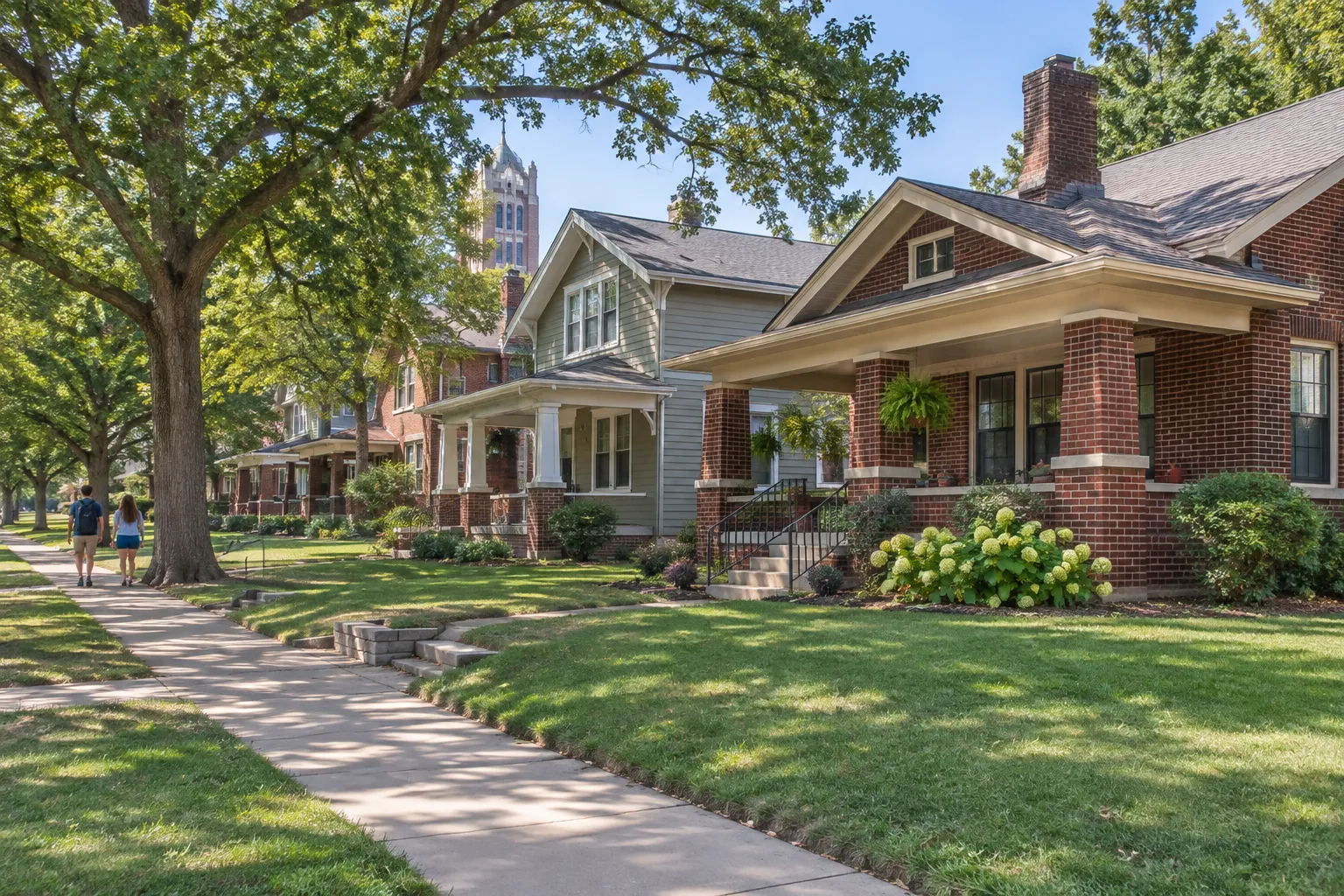
Norman is the Cleveland County seat, with 128,026 people at the 2020 census, and home to the University of Oklahoma and its roughly 32,000 students. Settled in the 1889 Land Run and incorporated in 1891, it mixes older neighborhoods near campus with large newer subdivisions on its edges, plus a lot of rental housing. Each of those asks something different of window film. This page sets out what is particular to Norman; every town we cover is on the areas page.
How does window film differ across Norman's housing?
Older houses near campus are more likely to have original or older single-pane glass, where film makes the biggest difference to heat and where winter insulating film can help too. Newer subdivisions mostly have double-pane glass that needs a film approved for it. Rentals favor removable or low-cost options.
| Kind of Norman property | Likely glass | Film that often fits |
|---|---|---|
| Older homes near campus | Older or single-pane | Heat film; insulating film for winter |
| Newer subdivisions | Double-pane, often low-e | Light ceramic or approved solar film |
| Student rentals and apartments | Varies | Static cling privacy, renter-friendly |
| Offices and shops | Commercial glazing | Solar and glare film |
For older glass, see window film for winter; for newer glass, window film on low-e glass.
Do Norman renters and landlords use window film?
Yes, for different reasons. Tenants often want privacy on ground-floor or street-facing rooms without permanent changes, which is what static cling film is for. Landlords sometimes film west-facing units to cut heat complaints and protect flooring from UV fading. Tenants should get the landlord's agreement before fitting adhesive film.
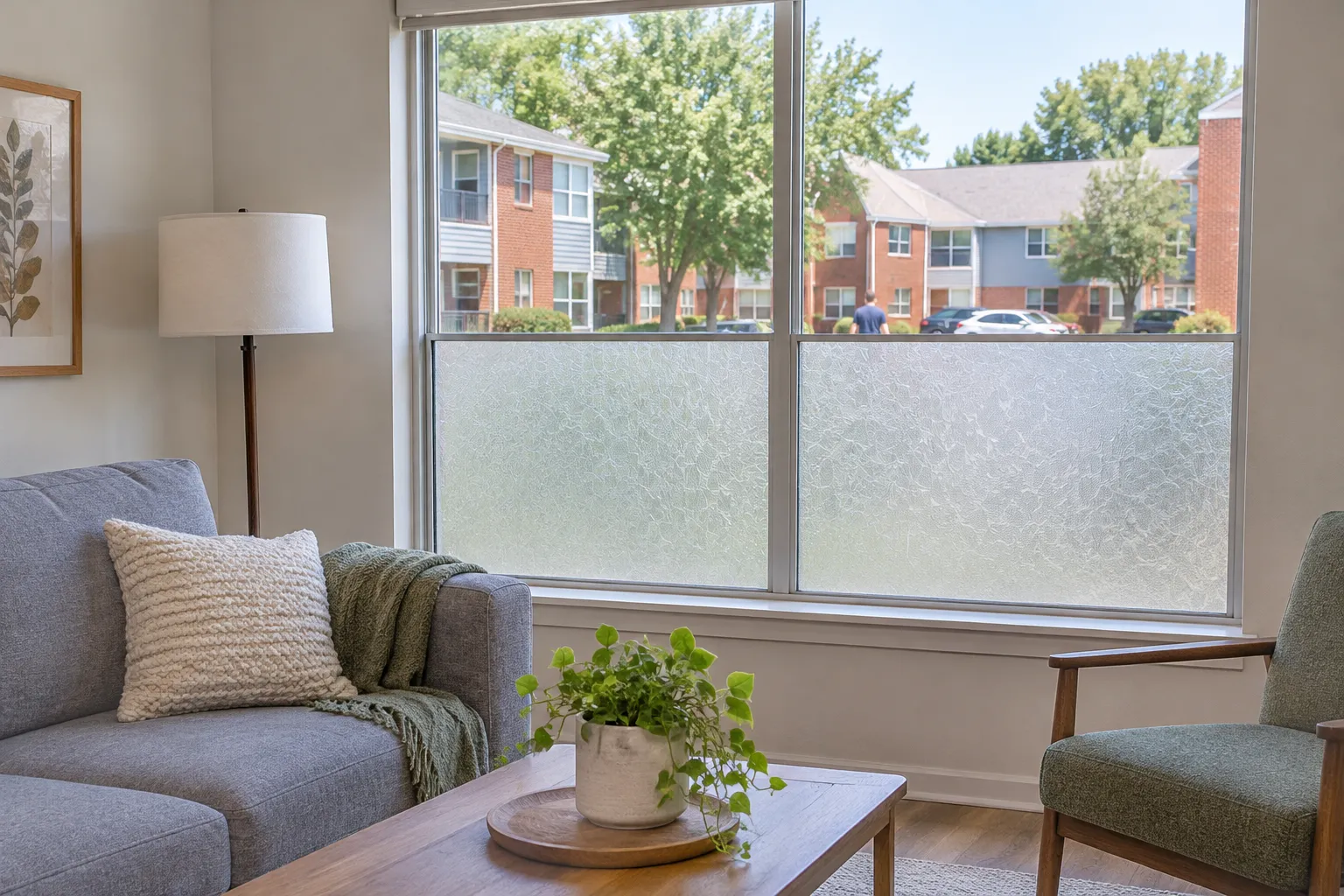
See static cling window privacy film.
Which windows in a Norman house get film first?
As across central Oklahoma, the west and south glass that takes long summer afternoons. Living rooms with large picture windows, sliding patio doors and upstairs bedrooms under the afternoon sun are the usual starting points. North-facing rooms rarely need heat film.
The film options are compared on heat control window film and ceramic window film.
Does Norman have storms that matter for window glass?
Yes. Cleveland County sits in an active severe-weather area, and Norman has seen tornado damage in several years. For glass, the relevant film is safety or security film, which holds broken glass together and reduces shards indoors. It doesn't make windows storm-proof and is no substitute for shelter.
See window security film.
What does window tinting cost in Norman?
Installed prices in Norman follow the ranges published in national cost guides: roughly $5 to $15 per square foot for most home film, with ceramic, security and decorative film higher. Many small rental jobs fall under an installer's minimum charge, so landlords often group units together.
The breakdown is on home window tinting cost. For a price on your own windows, send us the details and we'll set up a visit by a local installer, with a written figure you can accept or not.
Questions people ask
How much does window tinting cost in Norman?
Guide prices are about $5 to $15 per square foot installed for most residential film, with premium ceramic and security film costing more. A single window often meets an installer's minimum charge. The written quote after a visit sets your actual price.
Can I tint the windows in my Norman rental?
Ask your landlord first. Many leases restrict permanent changes, and adhesive film counts as one. Static cling privacy or UV film is the usual renter's choice, because it peels off cleanly when you leave and needs no tools or adhesive cleanup.
Do older Norman homes need special window film?
Not special, but different priorities. Older single-pane glass gains more from heat film, and an insulating low-e film can also cut winter heat loss. Original glass can be fragile, so the installer checks its condition and glazing before fitting anything.
Every area we cover is listed on Paneshade.
Sources
Last changed