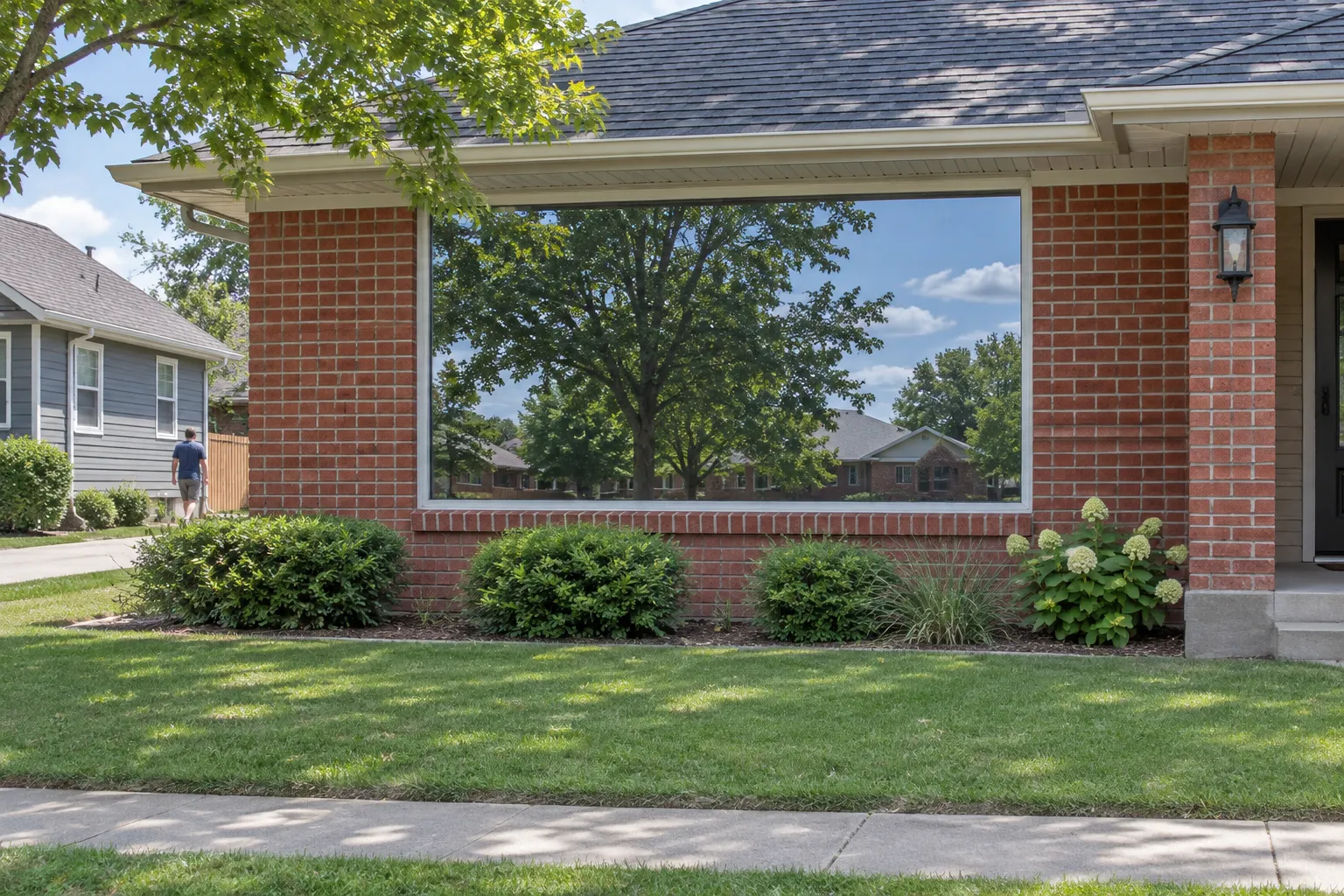
Privacy window film is a film applied to the inside of your glass so people outside can't see in clearly, while light still reaches the room. There are three main kinds: frosted film, which blurs the view in both directions all the time; one-way mirror film, which reflects outward in daylight; and decorative film, which adds a pattern. Which one is best depends on the room and on whether you need privacy at night, because mirror film stops working once your lights are on.
What can I put on my windows so I can see out but nobody can see in?
One-way mirror film, also called reflective privacy film, lets you see out while people outside see a mirror, as long as it is brighter outside than inside. It is the only film that keeps your view and hides the room. At night, when indoor lights are on, the effect flips, so it needs blinds or curtains after dark.
The film works because of light levels, not because the glass only lets light pass one way. The brighter side sees its own reflection; the darker side sees through. On an Oklahoma City summer afternoon, a street-facing living room with mirror film looks like a mirror from the sidewalk, and the film also cuts a lot of heat and glare.
Things to know before you choose it:
- It looks mirrored from outside, which some neighborhoods and HOAs care about. Check your HOA rules first.
- It darkens the view from inside a little, more so on cloudy days.
- It is designed for daytime privacy. For night, see the next section.
Our guide to one-way mirror film covers the darker and lighter options.
Is there a window privacy film that works at night?
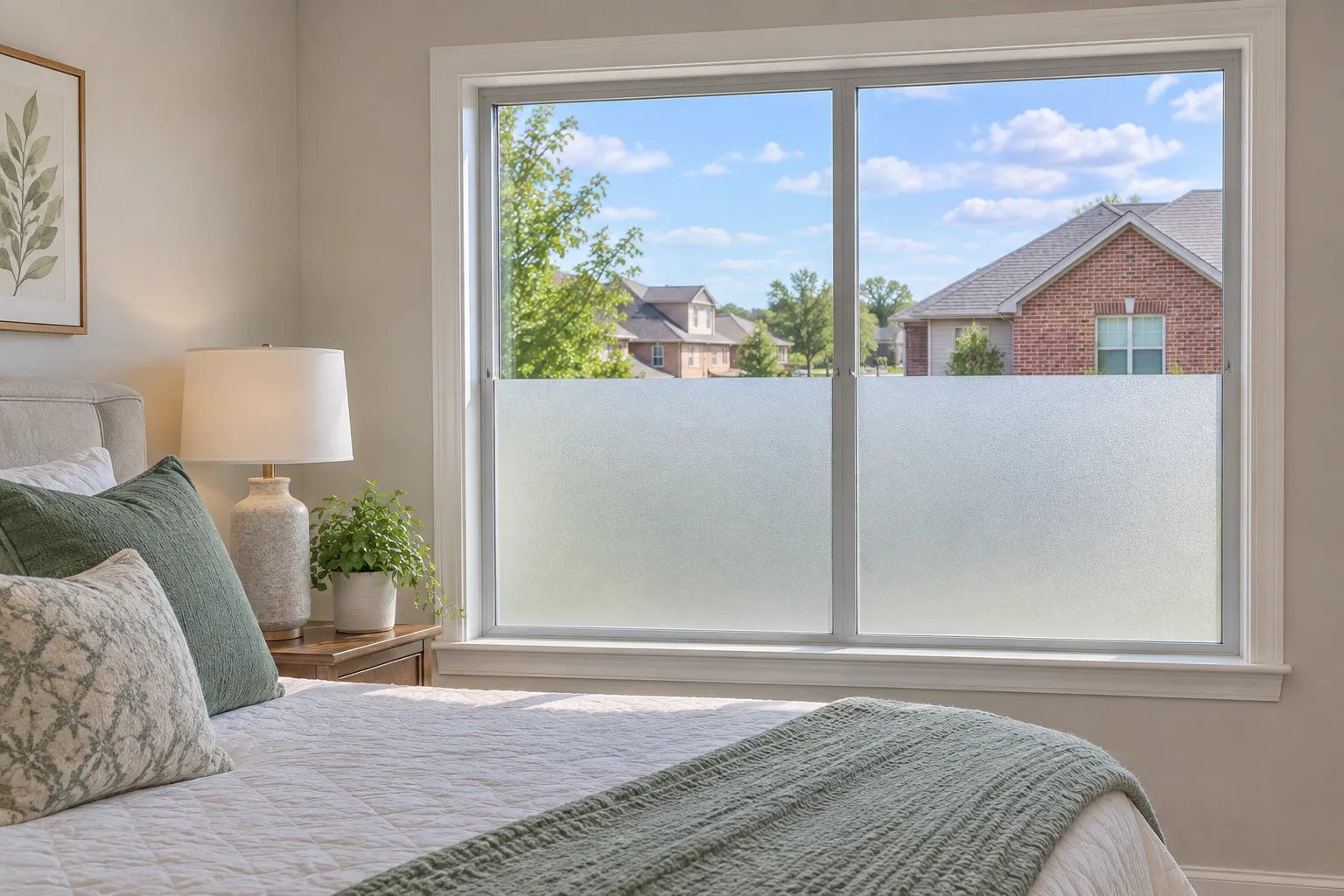
Yes: frosted, etched-look and most decorative films give privacy day and night, because they scatter light instead of reflecting it. People outside see shapes and light, not detail. Mirror film alone does not work at night. For a clear view by day and privacy at night, the usual answer is mirror film plus blinds, or frosted film on the lower part of the window.
There are dual-reflective and darker films marketed as day and night privacy. They reduce what can be seen at night, but no clear or mirrored film gives full privacy when the room is lit and the street is dark. We explain the light-level physics and the real options on day and night privacy film.
Which privacy film suits which room?
Match the film to how the room is used. Bathrooms and entry glass need privacy around the clock, so frosted film is the usual choice. Street-facing living rooms often get mirror film for daytime privacy plus heat control. Offices and bedrooms work well with frosted film on the lower half.
| Room or glass | Film that usually fits | Day | Night |
|---|---|---|---|
| Bathroom window | Frosted film | Private | Private |
| Front door and sidelights | Frosted or decorative film | Private | Private |
| Street-facing living room | One-way mirror film | Private, view kept | Not private without blinds |
| Bedroom facing neighbors | Frosted on the lower half | Private | Private |
| Glass shower or office partition | Frosted or patterned film | Private | Private |
Bathrooms are the most common privacy job, and we cover them on their own on bathroom privacy window film. For front doors, see glass door frosting, and for a colored look, stained glass window film.
Can you still see out of a dark tint like 5%?
From inside, you can see out of a very dark 5% film in daylight, but the view is dim, and at night it is hard to see out at all. For house windows, a 5% film is rarely the right privacy answer: it darkens the room every day of the year, and people can still see in at night when lights are on.
Very dark tint is a car-window idea. At home, a lighter mirror film gives the same daytime privacy with far more daylight, and frosted film gives privacy at night, which dark tint does not.
Does privacy film block heat and UV too?
Some privacy films do and some barely do. Reflective mirror film rejects a lot of solar heat. Frosted and decorative films mainly give privacy and diffuse light; their heat rejection is usually modest. Most quality films, including many frosted ones, block a high share of UV, which helps protect floors and furniture.
If heat matters as much as privacy, say so when you book: the installer can show films that combine both, or pair a heat film on sunny glass with frosted film where you need privacy. Our heat control window film page covers the heat side.
Should I use static cling privacy film or adhesive film?
Static cling film holds on with no glue, so it peels off cleanly, which suits renters and short-term needs. Adhesive film bonds to the glass, lasts much longer, looks smoother and is the type installers use. For a permanent bathroom or front door solution, adhesive film is the better choice.
Store-bought cling film is cheap and easy for small panes, but it can lift at the edges in summer heat and is hard to get perfectly smooth on large windows. More on static cling privacy film, and if you want to try a window yourself, our guide to DIY window tinting vs hiring an installer.
What about switchable smart glass for privacy?
Switchable or smart film turns from frosted to clear at the flip of a switch, using electricity. It suits conference rooms and some high-end bathrooms, but it costs many times more than standard privacy film and needs wiring. For most homes, frosted or mirror film does the job.
The price comparison is on switchable privacy glass cost.
How much does privacy window film cost?
Privacy film is priced per square foot of glass, like other installed films. Frosted and decorative films usually cost about the same as standard window film, mirror film similar, and custom-cut designs or switchable film much more. You get a written quote after a visit, based on your glass, before anything starts.
For typical price ranges and what moves them, see home window tinting cost and decorative window film cost. Ready to price your windows? Tell us about the job and we'll arrange a visit.
Questions people ask
Can my neighbors see in my windows during the day?
On a normal clear window, yes, if they look and the angle is right, especially when the room is bright. With one-way mirror film, during the day they see a reflection instead. With frosted film, they see light and blurred shapes at any time of day. Plain tint alone doesn't stop people seeing in once your lights are on.
Can you see through frosted window film at night?
No, not clearly. Frosted film scatters light, so at night people outside see a glow and vague shapes, not detail, even with your lights on. That is why it is the usual choice for bathrooms. It does let light out, so a lit room shows that someone is home.
Does frosted window film reduce light?
A little. Frosted film lets most daylight through but diffuses it, so the room stays bright with softer, even light and no direct view. Denser frosted films and solid patterns reduce more light. If a room is already dim, ask for a lighter frost or film on the lower part of the window only.
Can privacy film be removed later?
Yes. Static cling film peels off by hand. Adhesive film can be removed too, usually with heat and a scraper, followed by cleaning off the adhesive. It takes longer on old, sun-baked film. Our window film removal page explains how it is done.
Is privacy film allowed by HOAs?
Many HOAs allow interior window film, but some restrict mirrored or colored finishes visible from the street. Rules vary by neighborhood, so check your HOA's covenants or ask the management company before choosing mirror film. Frosted film on bathroom glass is rarely an issue.
Read on
- Bathroom privacy film
The best window film for bathroom privacy, from frosted to decorative, how it handles steam and showers, keeping light in, and doing it…
- Day and night privacy
Is there a window film that gives privacy at night?
- Frosted film
How frosted window film works, frost densities and finishes, where to use it, how it compares with blinds and frosted glass, and how to…
- One-way mirror film
How one-way mirror window film works, why it only gives privacy in daylight, how dark to go, where it suits a home or office, and its…
- PDLC smart film
How PDLC smart film switches glass from clear to frosted, where it is worth it, what installation involves, power and controls, and its…
- Stained glass film
How stained glass look window film works, where it suits a home, privacy and light, peel and stick versus installed film, and how it…
- Static cling film
How static cling privacy film works with no glue, when it is the right choice for renters and quick fixes, how to fit it, and where…
- Costs
What switchable smart film and smart glass cost per square foot, what adds to the bill (power, wiring, controls), and cheaper ways to get…
More services are listed on window tinting in Oklahoma City.
Sources
Last changed