Frosted window film is a translucent film that gives clear glass the look of frosted or etched glass. It blurs the view in both directions, so people can't see in, day or night, while most daylight still comes through, softened and evenly spread. It is the most popular privacy film for bathrooms, front doors and bedroom windows, and it can be removed later. This guide covers how it works, how to choose the density and finish, and where it fits. For all privacy options together, see privacy window film.
How does frosted window film work?
Frosted film has a finely textured or translucent layer that scatters light as it passes through. Instead of a clear image, you see soft light and vague shapes. Because it diffuses light rather than reflecting it, it works the same whether it is brighter inside or outside, which is why it stays private at night.
That makes frosted film the reliable choice wherever night privacy matters. One-way mirror film, by contrast, only works in daylight; see day and night privacy window film.
Does frosted window film reduce light?
A little. Most frosted films let most daylight through but spread it out, so rooms stay bright with softer, even light and fewer harsh shadows. Denser frosts and white or opaque films reduce more light. In an already dim room, choose a lighter frost or frost only part of the window.
Frost density options:
| Frost | Privacy | Light |
|---|---|---|
| Light or sheer frost | Shapes visible close up | Very little reduction |
| Standard frost | Shapes blurred | Small reduction |
| Dense or white frost | Very little visible | Noticeable reduction |
| Opaque or blackout | Full | Blocks light |
Where should I use frosted film?
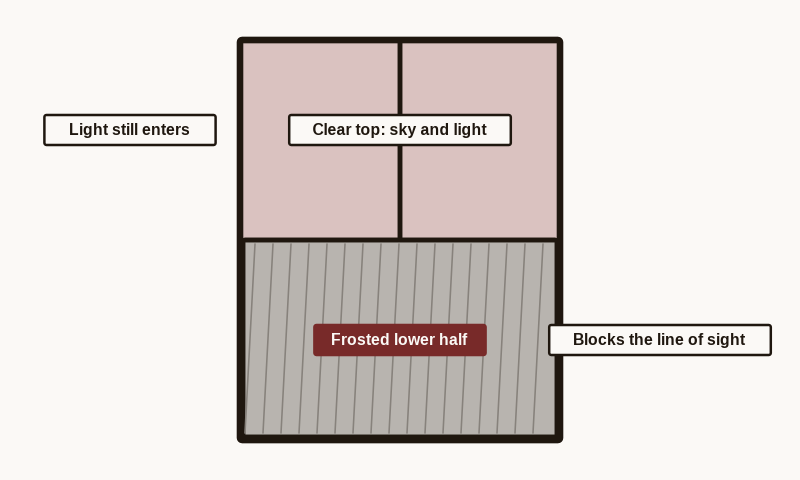
Use frosted film where you want light but not a view: bathroom windows, front doors and sidelights, glass shower enclosures, ground-floor windows facing a neighbor, office partitions and conference rooms. It is also useful on the lower half of a window, keeping privacy at eye level and clear sky above.
The most common jobs have their own guides: bathroom privacy window film and glass door frosting.
What finishes does frosted film come in?
Beyond plain frost, there are etched-glass and sandblasted looks, frosted bands and stripes, gradients that fade to clear, reeded or fluted glass looks, and frosted patterns. Plain frost suits most bathrooms; etched and reeded looks suit doors and offices. Patterns and gradients add style where full privacy isn't needed.
For patterns and colored looks, see decorative window film and stained glass window film.
How do I frost a window without replacing the glass?
Apply frosted film to the inside of the existing glass. It gives the look of frosted glass for a fraction of the price of new glass, goes on in place, and can come off later. Static cling frosted film is easy for DIY on small panes; adhesive film fitted by an installer looks smoother on larger glass and lasts longer.
Comparing film with factory-frosted glass is covered on frosted glass vs film, and DIY options on static cling window privacy film.
How much does frosted film cost?
Published guides put installed frosted film at about $6 to $10 per square foot, checked in November 2026. A typical bathroom window usually costs the installer's minimum charge, often around $250, so it is worth combining several windows or doors in one visit. DIY static cling film costs much less in materials.
The detailed breakdown is on decorative window film cost.
How do you look after frosted film?
Clean it with a soft cloth and a mild, non-abrasive cleaner. Avoid scouring pads, razor blades and harsh chemicals, which can scratch or cloud the surface. In showers, film on the dry side of the glass lasts longest. Wait the installer's curing time, often around a month, before the first clean.
Quality frosted film fitted indoors typically lasts many years; see how long window tinting lasts.
Questions people ask
Can you see through frosted window film at night?
Not clearly. Because frosted film diffuses light, people outside at night see a glow and blurred shapes, even with your lights on. Very light or sheer frosts show more shapes close to the glass, so choose a standard or dense frost for bathrooms and bedrooms.
Does frosted film block UV?
Many frosted films block a high share of UV, which helps slow fading of floors and furniture. The amount varies by product, so check the stated UV rejection if it matters to you. Frosted film usually rejects less heat than solar films.
Can frosted film go on a front door?
Yes. Frosted or etched-look film on front door glass and sidelights is one of the most common jobs. It adds privacy at the entry while keeping the hallway bright. Clean trimming around the door's glass edges matters most, since you see it every day.
Is frosted film easy to remove?
Yes. Static cling frosted film peels straight off by hand. Adhesive frosted film comes off with gentle heat and a plastic scraper, then cleaning the adhesive, and newer film usually comes away more easily than old, sun-baked film. See window film removal for the steps.
Does frosted film look like real frosted glass?
At normal viewing distance, a quality frosted film looks very close to real frosted or etched glass. Up close, etched glass has a slightly finer texture and no film edge. Neat installation, with tight, even edges, is what makes film look convincing.
The rest of our guides start from window tinting oklahoma city.
Sources
- Published frosted film cost guides (HomeAdvisor, Angi), checked November 2026
- International Window Film Association, residential
Last changed