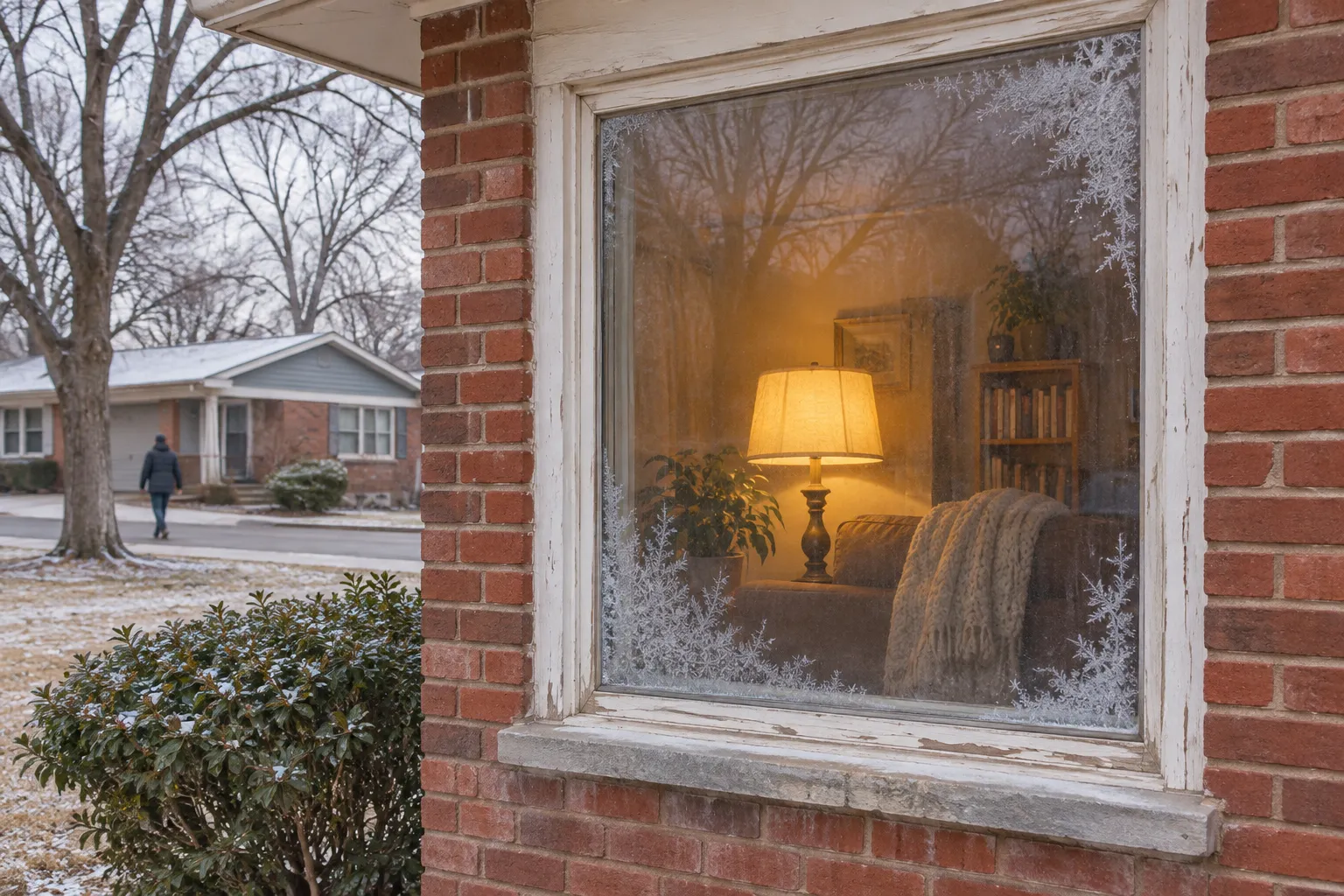
The best window film for winter is a low-e or insulating film: a clear film with a coating that reflects heat back into the room, which lowers the window's U-value and cuts heat loss through the glass. Ordinary solar or tinted film is designed to block summer sun and does little to keep a room warm. In Oklahoma City, where summers are long and hot but winter nights still freeze, a film that works in both seasons can make sense on older single-pane windows. This page explains how winter film works, what the numbers mean, and when other fixes help more.
Does window film help keep heat in during winter?
Only certain films. Low-e or insulating films reflect long-wave heat from inside the room back toward it, reducing heat loss through the glass. The International Window Film Association says films that lower glass emissivity can give winter savings as well as summer ones. Standard solar and dyed films mainly block incoming sun and do little for heat loss.
So the first question to ask any installer is whether the film has a low-e coating and a published winter U-value. If it doesn't, it is a summer film.
What is a U-value and why does it matter?
The U-value measures how quickly heat passes through a window: the lower the number, the less heat escapes. Insulating film lowers the U-value of the glass it is applied to. For example, 3M lists its Thinsulate CC75 film as taking single-pane clear glass from a U-value of 0.82 to 0.53.
| Glass | U-value (lower is better) |
|---|---|
| Single-pane clear glass, no film | 0.82 |
| Single-pane clear glass with 3M Thinsulate CC75 | 0.53 |
Figures from 3M's published solar property summary. Results on double-pane glass are smaller, because the glass already insulates better.
Which windows benefit most from winter film?
Single-pane windows benefit most, because they lose heat fastest. Older homes with original glass, sunrooms with large single panes, and drafty-feeling rooms near big windows are where insulating film makes a noticeable difference. Newer double-pane and low-e windows already insulate well, so the added benefit is smaller.
The IWFA notes that on low-e windows the benefit depends on the type of low-e coating and where it sits in the window unit, so ask the installer to check before recommending a film. Our guides to window film on low-e glass and tinting double pane windows go into this.
Older neighborhoods such as Heritage Hills, with homes built in the early 1900s, are where original single-pane glass is most common; see our Heritage Hills page.
Can one film work for both summer and winter?
Yes. Low-e insulating films usually also reject some solar heat and block a high share of UV, so they help year-round. They tend to reject less summer heat than a dedicated solar or reflective film. In Oklahoma, where cooling usually dominates, many homeowners put heat-control film on sunny west glass and insulating film on north or older single-pane windows.
The summer side is covered on heat control window film.
Does window film stop drafts?
No. Film reduces heat passing through the glass, but it doesn't seal gaps around the sash or frame where drafts come from. If you feel moving air near a window, weatherstripping, caulking or repairing the frame will help more than any film. Film and draft-proofing work well together.
Signs the problem is air leaks rather than the glass: cold air you can feel on your hand near the edges, rattling sashes, or visible gaps. Signs it is the glass: the pane itself feels very cold and rooms near big windows feel chilly even with no draft.
What else can I put on windows to keep the cold out?
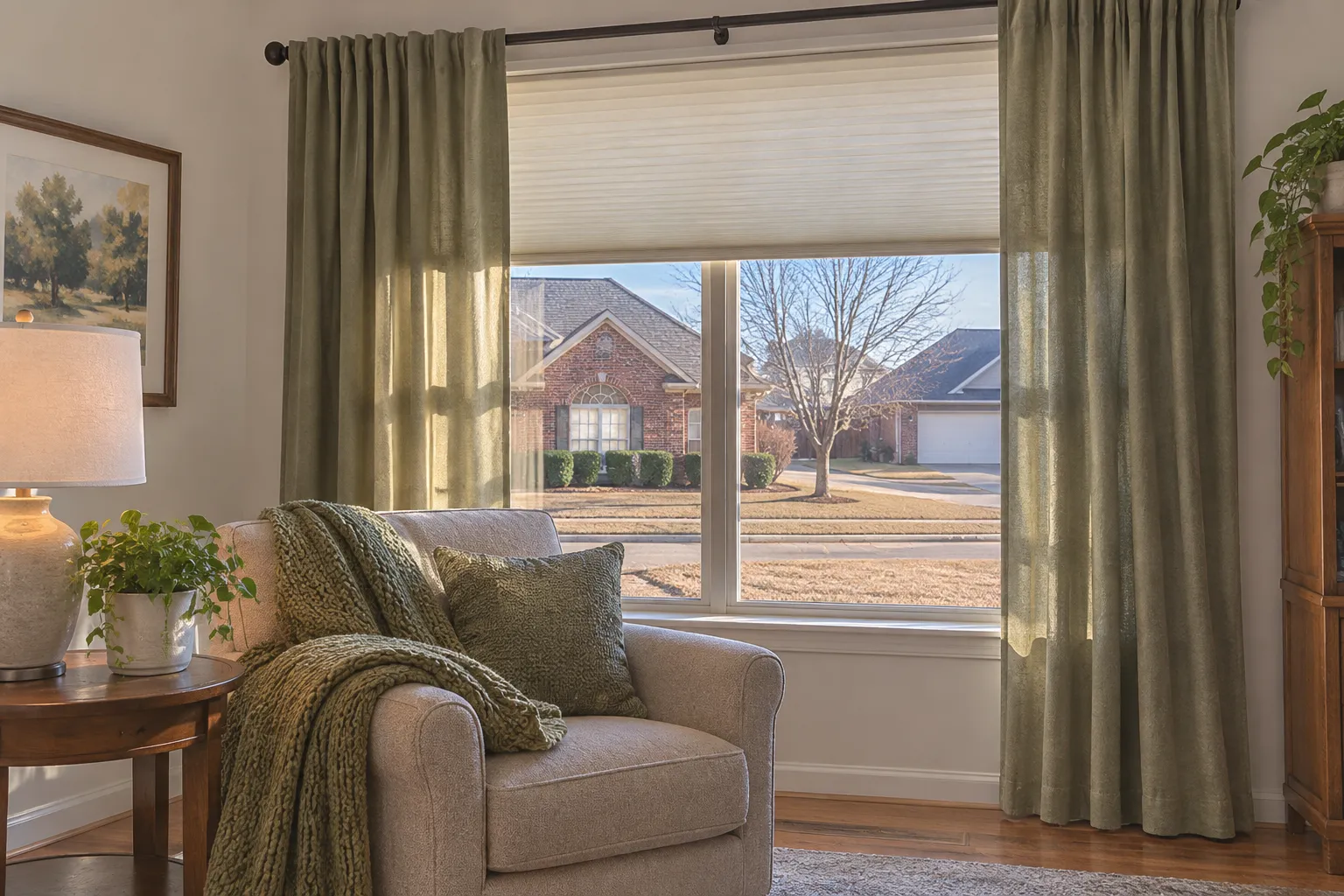
Besides insulating film, heavy or thermal curtains, cellular shades, interior storm windows and seasonal plastic shrink film all reduce heat loss. Curtains and shades help only when closed. Shrink film kits are cheap and effective for a single winter, but come down each spring. Insulating window film stays on year-round without changing how the window looks.
| Option | Works when | Lasts |
|---|---|---|
| Insulating low-e film | All the time | Years |
| Thermal curtains or cellular shades | When closed | Years |
| Seasonal shrink film kit | Winter only | One season |
| Interior storm windows | All the time | Years |
| Weatherstripping and caulk | All the time, for drafts | Years |
How much does insulating window film cost?
Insulating low-e films are usually priced above standard solar film, often closer to ceramic film prices. Guides list installed residential film at roughly $5 to $15 per square foot overall, with premium films at the top of that range or above. You get a written quote for your glass after a visit before anything starts.
See window tinting cost for the price table. Tell us which windows feel cold and we'll arrange a visit.
Questions people ask
What is the best window covering to keep cold out?
For a lasting fix that keeps the view, insulating low-e window film or interior storm windows work well. For the cheapest option, closed thermal curtains or cellular shades help a lot at night. Seasonal shrink film works for one winter. If you feel drafts, seal the frame first.
How can I stop cold air coming through windows?
Moving cold air comes from gaps, so weatherstripping, caulking around the frame and fixing loose sashes stop it. Film doesn't stop drafts. Once the gaps are sealed, insulating film, thermal curtains or interior storm windows reduce the cold coming off the glass itself.
Does regular window tint make a house colder in winter?
It can block some winter sunshine that would otherwise warm a room, so south-facing rooms may feel a little cooler on sunny winter days. On cloudy days and at night it makes little difference. Insulating low-e films offset this by reducing heat loss through the glass.
Is insulating film worth it on double-pane windows?
Sometimes, but the gain is smaller than on single-pane glass, because double-pane windows already insulate better. It is most worth it on large double-pane glass in rooms that feel cold, or where you also want summer heat and UV control. Ask for winter performance figures for your specific glass.
Will insulating film cause condensation?
Insulating film keeps the room-side glass surface warmer, which usually reduces condensation on that surface. On some windows, condensation can shift to other surfaces, such as frames. Persistent heavy condensation usually points to high indoor humidity or failed window seals, which film won't fix.
See window tinting oklahoma city for the other services and what they cost.
Sources
Last changed