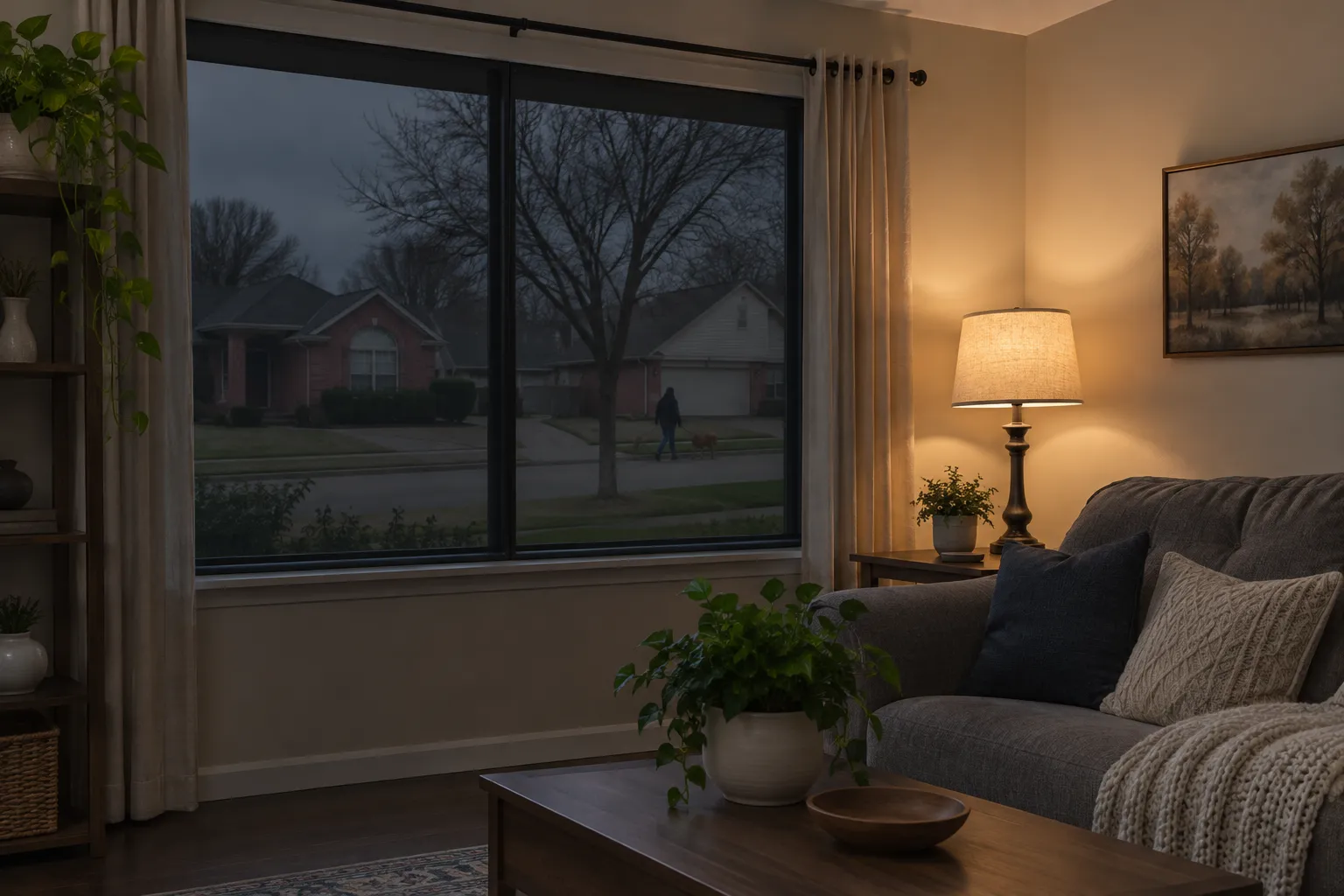
The main disadvantages of home window tinting are darker rooms with some films, privacy that disappears at night with mirror film, less winter sunshine, a possible effect on window warranties and glass if the wrong film is used, a changed look from outside, and the upfront cost. Almost all of them come from choosing the wrong film for the window. This guide lists each downside plainly and how to avoid it. For the full picture, see home window tinting.
Does window tint make rooms darker?
Darker and reflective films do. Light ceramic, spectrally selective and clear UV films barely change how bright a room feels, while still cutting heat, glare or UV. Choosing film by darkness alone is the usual cause of gloomy rooms; choosing by heat rejection and visible light figures avoids it.
How to avoid it: ask for light films with good heat rejection and look at samples on your own windows at different times of day.
Does mirror film lose privacy at night?
Yes. One-way mirror film only works while it is brighter outside than in. After dark, with lights on, people can see in. This catches out many homeowners who chose mirror film for privacy, especially in bedrooms and bathrooms facing the street or a neighbor.
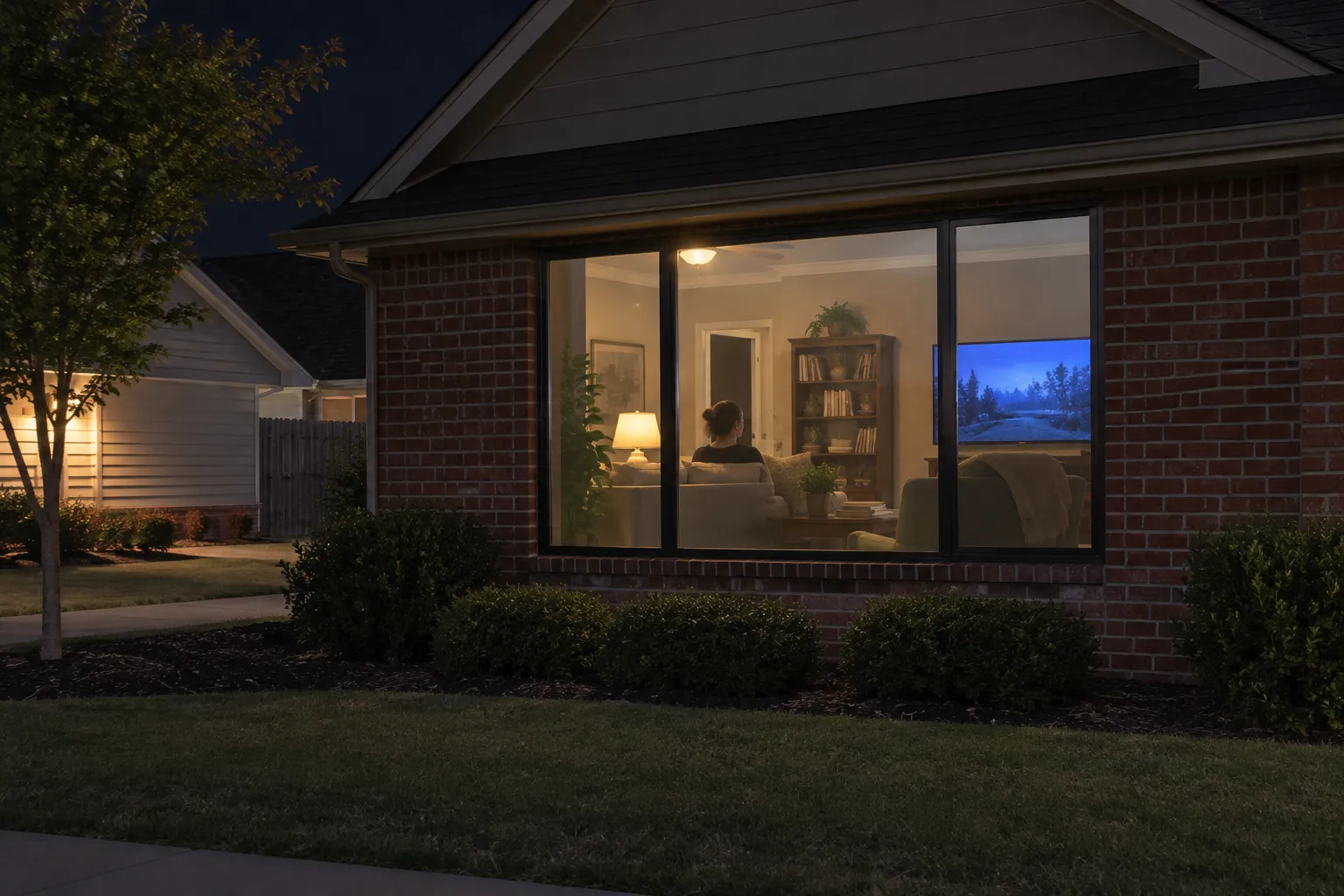
How to avoid it: use frosted or decorative film where you need privacy at night, or plan for blinds. See day and night privacy window film.
Does window film block winter sun?
Most heat control films block some winter sun as well as summer heat, so south-facing rooms can feel slightly cooler on sunny winter days. In Oklahoma, where cooling usually dominates the year, most homeowners accept that trade for cooler summers.
How to avoid it: skip film on south windows you rely on for winter warmth, or choose an insulating low-e film that also reduces heat loss. See window film for winter.
Can window film damage glass or void window warranties?
It can if the film isn't suitable for the glass. Some films add heat to the glass, and the International Window Film Association explains that thermal stress is the main risk, which is why film makers publish film-to-glass guidance. Some window makers also exclude aftermarket film from their warranties.
How to avoid it: have an installer check your glass type and use an approved film, and read both the window and film warranties. See tinting double pane windows and window film warranties.
Can window tint look bad from outside?
Strongly mirrored or dark films change how a house looks from the street, which some people and some HOAs dislike. Mixed films on one elevation can look patchy. Cheap film that bubbles or turns purple looks worse every year. First impressions from the curb matter if you plan to sell.
How to avoid it: use light, low-reflective films on the street side, keep one film per elevation, choose quality film, and check HOA rules. See exterior and low-reflective window film.
Can window film affect phone signals?
Heavily metallized films can weaken cell and radio signals passing through the glass, which matters mainly in homes that already have weak reception near the windows. Most people never notice a difference, and non-metal films avoid the issue altogether. Mention reception problems before you choose.
How to avoid it: choose a ceramic or other non-metal film where signal matters. See ceramic window film.
Is window tinting expensive?
It has an upfront cost, roughly $5 to $15 per square foot installed in national guides, with ceramic and security films higher, and most installers charge a minimum. On shaded windows, the benefit may not justify the cost at all.
How to avoid it: film only the windows that need it, mostly west and south glass, and combine jobs into one visit. See home window tinting cost.
Does window film need special care?
A little. Film shouldn't be cleaned for a few weeks while it cures, and afterward needs a soft cloth and mild cleaner, never blades or scouring pads. It also has a lifespan, typically 10 years or more for quality interior film, after which it needs replacing.
How to avoid problems: follow the installer's aftercare, and see how long window tinting lasts.
Questions people ask
What are the downsides of using window film?
Darker rooms with some films, no night privacy with mirror film, slightly less winter sun, possible glass or warranty issues with unsuitable films, a changed exterior look, and the upfront cost. Most are avoided by choosing a light, glass-approved film for the windows that need it.
Is tinting house windows a good idea?
For sunny windows, usually yes: cooler rooms, less glare and slower fading outweigh the downsides when the film is chosen well. For shaded windows, it is rarely worth it. See home window tinting benefits for the upside in more detail.
Does window tint make a house look cheap?
Quality light film fitted well is barely noticeable from outside. Heavy mirror film, mixed films on one side, or old film that bubbles or turns purple can make a house look less cared for. Consistent, quality, light film avoids that.
Can window tint cause condensation?
Film doesn't usually cause condensation; many films keep the inner glass surface slightly warmer, which can reduce it. Heavy condensation usually points to high indoor humidity or failing window seals, which film won't fix. Better ventilation is the usual first step.
Can I remove window film if I don't like it?
Yes. Static cling film peels off, and adhesive film can be removed with heat, peeling and adhesive cleanup. It is work, especially with old film, but it doesn't harm the glass when done properly. See window film removal for the steps.
The rest of our guides start from Paneshade.
Sources
Last changed