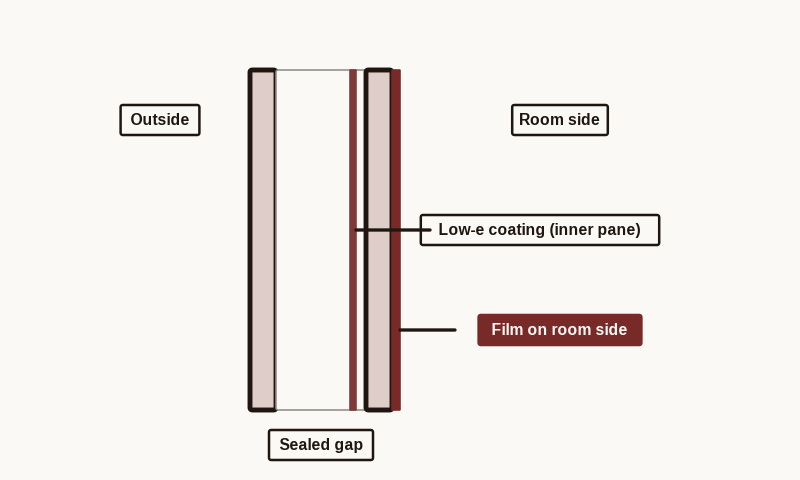
You can usually put window film on low-e glass, but the gain is smaller than on plain glass and the film has to be chosen for the coating. Low-e glass has a microscopically thin coating that reflects heat, so it already cuts some of the solar heat or heat loss that film would otherwise address. The International Window Film Association says the benefit of film on low-e windows depends on the type of low-e coating, where it sits in the window, and what you want to achieve. This guide explains how to judge it. For film types, see heat control window film.
What is low-e glass?
Low-e, short for low-emissivity, glass has a nearly invisible metallic coating that reflects long-wave heat. Depending on the type, it keeps indoor heat in during winter, keeps solar heat out in summer, or both. It is most common on double-pane windows, where the coating usually sits on one of the inner glass surfaces sealed inside the unit.
Two broad kinds are common:
- Coatings aimed at winter, which mainly keep indoor heat from escaping and let more sun in.
- Solar control coatings, which also reject more incoming solar heat, popular in hot climates.
Your window's label, paperwork or the manufacturer can tell you which you have. A simple flame or light reflection test can show whether a coating exists, but not its type.
Can you put window film on low-e windows?
Usually yes, with a film the film maker approves for that glass. Because some films absorb heat, adding film to coated, double-pane glass can raise the glass temperature. Film makers publish film-to-glass tables so installers pick films that keep the glass within safe limits. The IWFA suggests asking the dealer whether your low-e windows suit film.
If you are unsure what glass you have, an installer can check it on site before recommending anything.
Will film still reduce heat on low-e glass?
Often a little, sometimes a lot, depending on the coating. On low-e glass designed for winter, which lets solar heat in, a solar control film can still make a noticeable difference on west and south windows. On glass with a strong solar control coating already, film adds less heat rejection, and its main benefits may be glare, privacy or UV.
| Your low-e glass | What film can still add |
|---|---|
| Winter-type coating, sunny west or south side | Noticeable solar heat and glare reduction |
| Solar control coating, sunny side | Some extra heat rejection, glare control, privacy |
| Any low-e glass, shaded side | Little heat benefit; privacy or decorative uses only |
Ask the installer for total solar energy rejected figures for the film on your specific glass.
Does film void low-e window warranties?
It can, if the window maker's warranty excludes aftermarket film or if the film isn't approved for that glass. Some window makers restrict film; some film makers offer glass-breakage or seal-failure cover when their film is installed by an authorized dealer according to their guidelines. Read both warranties before choosing.
We cover what film warranties typically include on window film warranties.
Is low-e film the same as low-e glass?
No, though they work on a similar principle. Low-e films are applied to the room side of existing glass and lower its emissivity, reducing heat loss in winter. The IWFA says films that lower glass emissivity can give winter savings as well as summer cooling. They are mostly used on single-pane or older double-pane windows without a coating.
If your windows already have a good low-e coating, adding low-e film usually helps less. See window film for winter.
Which film is best on low-e windows?
The best film is one the film maker lists as compatible with your exact low-e glass and that does the job you want: heat, glare, privacy or UV. Light ceramic or spectrally selective films are common choices for heat with a natural look; frosted or decorative films for privacy. Compatibility comes first, performance second.
See ceramic window film and privacy window film, and our companion guide on tinting double pane windows.
Questions people ask
Can you tint low-e windows?
Usually yes, using a film the film maker approves for that glass. The installer checks the coating type, glass size and sun exposure against the film maker's guidance. The benefit is smaller than on plain glass, so be clear about what you want the film to do.
How do I know if my windows are low-e?
Check the label on the glass or window frame, or the paperwork from when the windows were installed. Holding a lighter or penlight to the glass and looking at the reflections can show a coating, often as a slightly different colored reflection. An installer can also check on site.
Should I tint low-e windows for heat?
If the windows face west or south and the rooms still overheat, a compatible solar film can help, especially on winter-type low-e glass. On solar control low-e glass, the extra heat benefit is smaller. Ask for performance figures for your glass before deciding.
Does film on low-e glass cause seal failure?
Film installed on compatible glass according to the film maker's guidance shouldn't harm the seals. Problems are more likely with an unsuitable film or poor installation. That is why film makers publish film-to-glass tables and why some offer seal-failure cover with authorized installation.
Will window film make low-e windows look different?
A light film barely changes the look from inside or outside. Reflective films add a mirrored look in daylight, and darker films darken the glass. If keeping the look matters, ask for samples of light films on your actual windows.
The rest of our guides start from window tinting across Oklahoma City.
Sources
Last changed