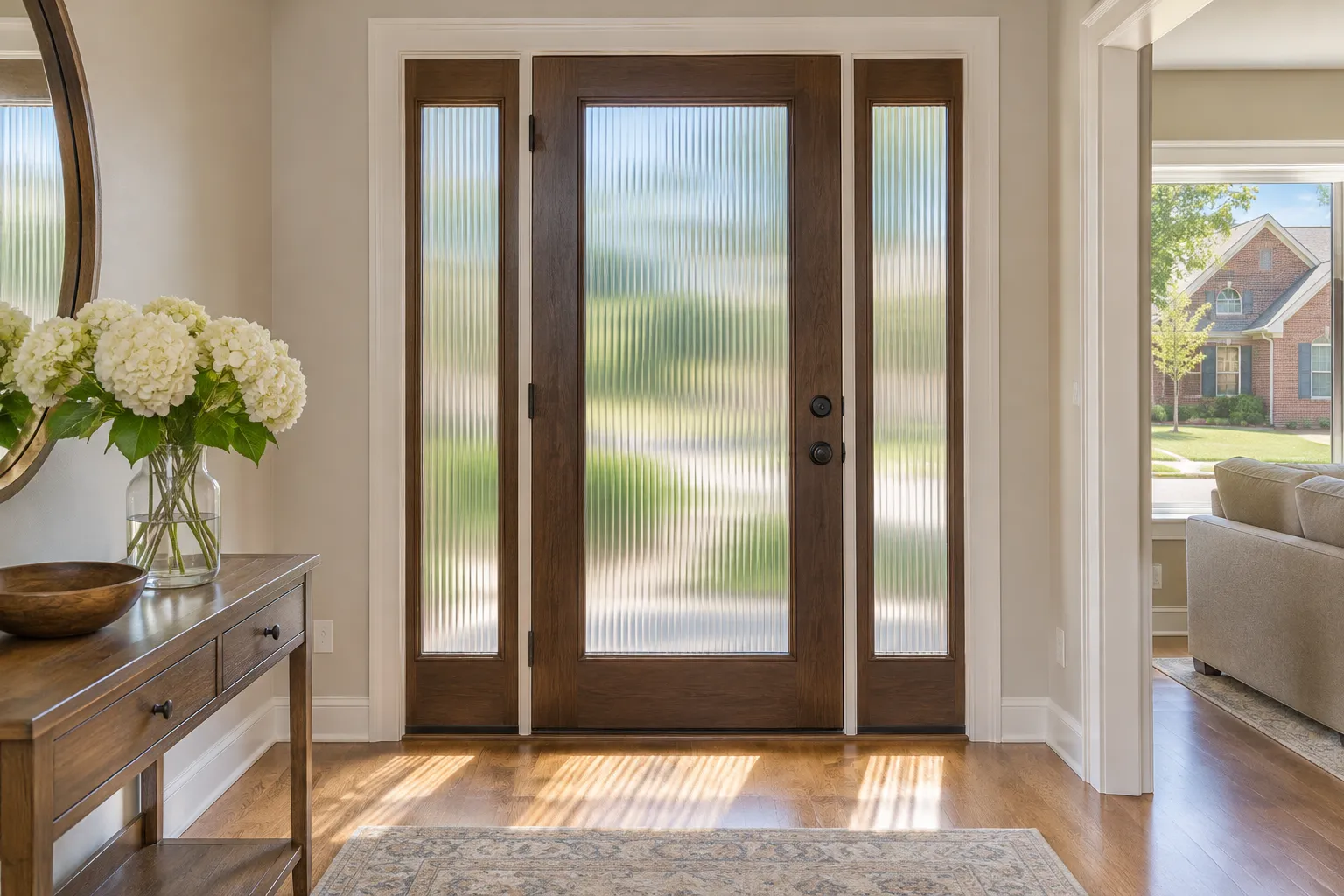
Decorative window film is a film that changes how glass looks: frosted, etched-look, patterned, gradient, colored or stained glass style. Most decorative films also add privacy, because they blur the view through the glass while still letting daylight in. It is a fraction of the cost of replacing glass, and it can be removed later if your taste or your tenants change. This page covers the main styles, where each one works in a home or office, and what to ask before choosing.
What types of decorative window film are there?
The main types are plain frosted film, etched or sandblasted looks, patterns such as stripes, dots and reeded glass, gradients that fade from frosted to clear, colored and stained glass looks, and custom-cut designs or logos. Major film makers sell decorative lines for both homes and businesses alongside their solar and security films.
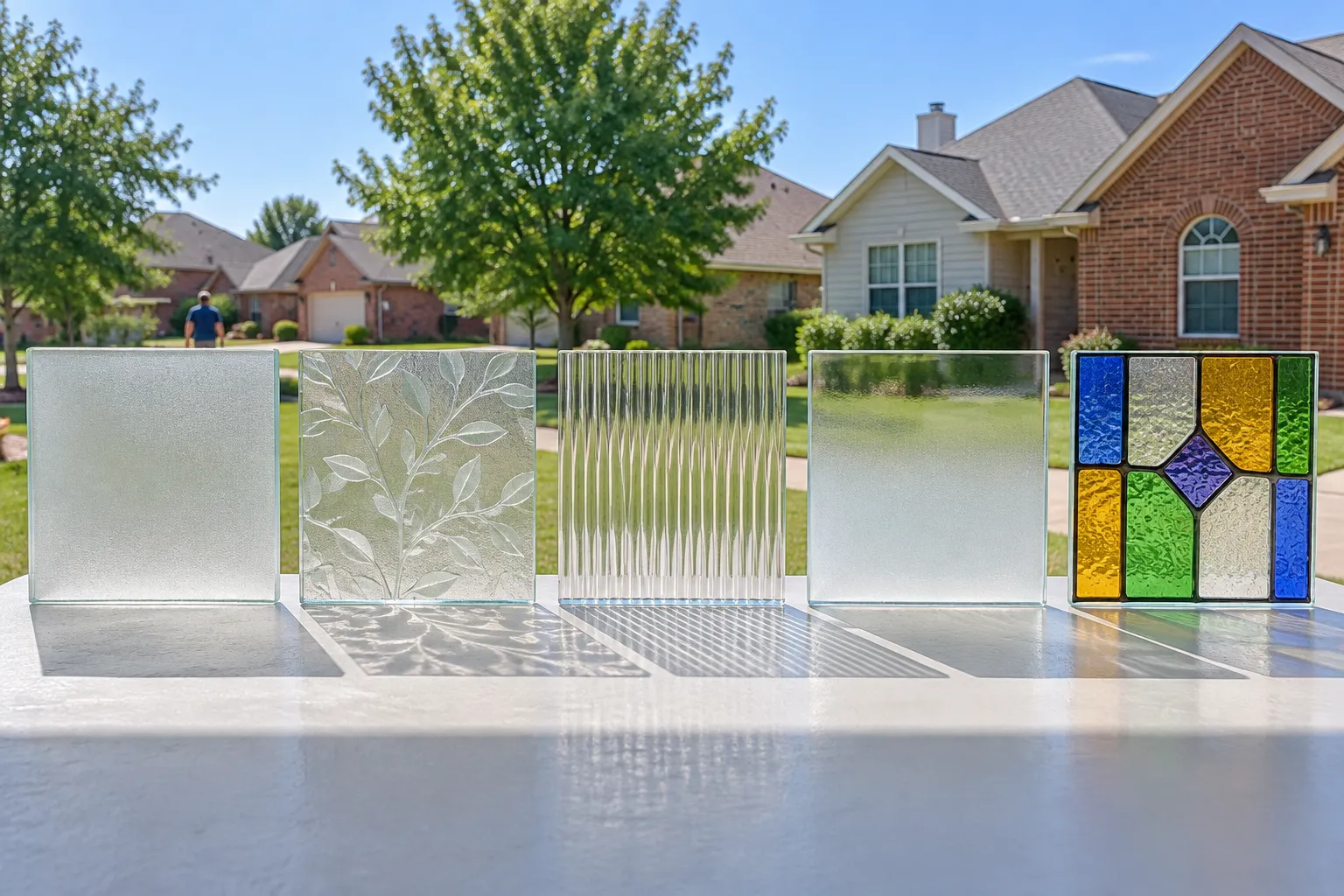
| Style | Privacy | Light | Typical use |
|---|---|---|---|
| Plain frosted | High, day and night | Most daylight through, diffused | Bathrooms, entry glass |
| Etched or sandblasted look | High | Diffused | Front doors, offices |
| Patterns and reeded glass | Medium to high | Depends on density | Interior doors, cabinets |
| Gradient | Partial | Clear at top | Bedrooms, street-facing rooms |
| Stained glass and colored | Medium | Colored light | Transoms, sidelights, accents |
| Custom cut and logos | Varies | Varies | Storefronts, offices |
For the plain frosted option on its own, see frosted window film. For colored designs, see stained glass window film.
Where does decorative film work well in a house?
Decorative film works best on glass where you want light but not a view: bathroom windows, front doors and sidelights, glass shower enclosures, interior French doors, and lower panes of street-facing windows. It solves privacy without curtains and dresses up builder-grade glass.
Common home jobs around Oklahoma City:
- Front door and sidelights: an etched or reeded look adds privacy at the entry. See glass door frosting.
- Bathroom windows: plain frosted film for privacy around the clock. See bathroom privacy window film.
- Glass showers: a frosted band at body height on the dry side.
- Bedrooms facing neighbors: a gradient or frosted lower half keeps the sky view.
- Interior glass doors and cabinets: patterns for style rather than privacy.
How is decorative film used in offices and stores?
Offices use frosted and patterned film on conference room walls, glass doors and partitions for privacy and to stop people walking into clear glass. Stores and clinics use frosted bands, custom-cut logos and graphics on entry glass. Film can be changed when a business rebrands, without replacing the glass.
Our commercial window tinting page covers office projects, and switchable privacy glass cost covers rooms that need to switch between clear and private.
Does decorative film give privacy at night?
Yes, most frosted and decorative films give privacy day and night, because they scatter light instead of reflecting it. People outside see light and blurred shapes, not detail, whether your lights are on or off. That is the key difference from one-way mirror film, which only works in daylight.
The density of the pattern decides how much shows through: a dense frost hides almost everything, while a light pattern or gradient hides less. If night privacy is the main goal, ask to see samples against a lit room. More on this on day and night privacy window film.
Is decorative film better than frosted or etched glass?
Film is far cheaper, quick to fit, and removable, so it suits most homes and changing office layouts. Factory frosted or etched glass lasts longer and won't scratch or peel, but replacing glass costs many times more. For most people, film gives the look at a fraction of the price.
We compare the two in detail on frosted glass vs film.
Does decorative film block heat or UV?
Most quality decorative films block a high share of UV, which helps slow fading inside. Heat rejection is usually modest unless the product includes a solar layer. If a decorative window also gets strong afternoon sun, ask about a combined product, or put heat film on the rest of the glass and decorative film where you need privacy.
The heat options are on heat control window film.
Can I put decorative film on myself?
On small, simple panes, yes: static cling decorative films are sold for DIY and peel off cleanly. Large panes, visible front doors, and patterns that must line up across several panes are much harder to get right, and adhesive films are less forgiving. Many people DIY a small window and hire out the front door.
See static cling window privacy film and DIY window tinting vs hiring an installer.
How much does decorative window film cost?
Published guides put installed decorative film at about $6 to $13 per square foot, plain frosted film at about $6 to $10, and custom-cut designs up to about $25. Small jobs such as one bathroom window usually meet the installer's minimum charge. You get a written quote after a visit before any work starts.
The full breakdown is on decorative window film cost. Tell us which glass and the look you want, and we'll arrange a visit.
Questions people ask
Does decorative window film reduce light?
A little. Most frosted and decorative films let most daylight through but diffuse it, so rooms stay bright with softer light. Dense patterns and dark colored films reduce more. If the room is already dim, choose a light frost or a gradient that leaves the top of the window clear.
How do I frost a window without replacing the glass?
Apply frosted window film to the inside of the glass. It gives the look of frosted glass for a fraction of the price, and it is removable. Static cling film is the simplest DIY option for small panes; adhesive film fitted by an installer looks smoother on larger glass and lasts longer.
Can decorative film go on double-pane windows?
Usually yes. Decorative films generally add little heat to the glass, but the installer should still check the film maker's guidance for your glass type. On low-e or specialty glass, follow that guidance so the window and film warranties stay in place.
Does decorative film look cheap?
Not when it is a quality product fitted well: a good etched-look or frosted film is hard to tell from real frosted glass at normal distance. Thin, cheap films and visible bubbles or edges are what look cheap. Precise trimming at the edges matters most on doors you see every day.
Can I remove decorative film later?
Yes. Static cling film peels straight off, and adhesive decorative film comes off with gentle heat and a plastic scraper, followed by cleaning the adhesive. Our window film removal page covers the methods, including what is safe on double-pane glass.
Read on
- Costs
Guide prices for frosted, patterned, stained glass look and custom decorative window film, and how they compare with frosted or etched…
- Glass door frosting
How to frost a glass front door, sidelights, French doors or office doors with film: styles, privacy, light, safety markings, fitting and…
More services are listed on window tinting oklahoma city.
Sources
- Published decorative and frosted film cost guides (HomeAdvisor, Angi, American Window Film), checked November 2026
- LLumar, residential and commercial decorative film families
- International Window Film Association, residential
Last changed