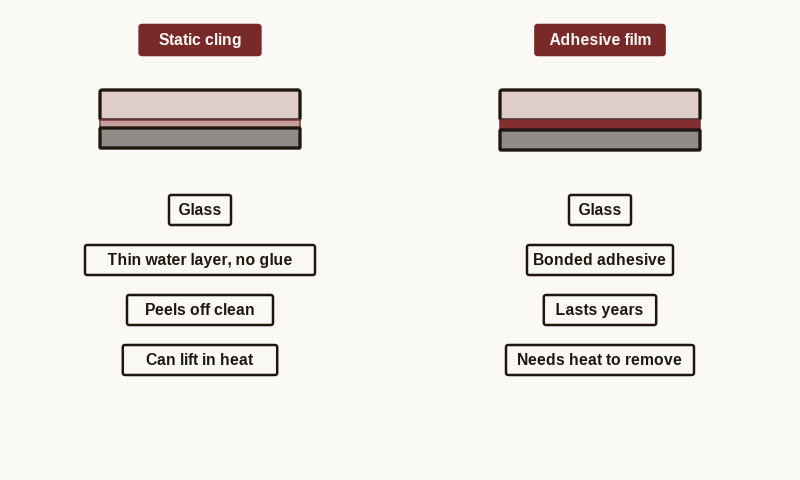
Static cling window privacy film is a thin, usually vinyl film that holds to smooth glass by static and surface tension instead of glue. It goes on with water, peels off cleanly, and can often be reused, which makes it popular with renters and for quick privacy fixes. The trade-offs are a shorter life, a tendency to lift at the edges in heat, and a less polished look on big panes. This guide covers when it is the right choice, how to fit it, and when adhesive film is better. For all privacy films together, see privacy window film.
How does static cling film stick without glue?
Static cling film is soft and smooth enough to seal against clean glass, held by static attraction and the thin film of water used to apply it. As the water dries, the film stays in close contact with the glass. Because there is no adhesive, it lifts off by hand and leaves no residue.
It only works on smooth glass. Textured, dirty or very cold glass won't hold it well.
When is static cling film the right choice?
Static cling film suits renters, short-term privacy needs, small windows, trying out a look before committing, and glass you may want clear again, such as a nursery or a home office. It is also handy for seasonal uses. For a permanent bathroom, front door or large window, adhesive film is usually better.
| Situation | Static cling | Adhesive film |
|---|---|---|
| Renting, must leave no trace | Good fit | Possible, but removal takes work |
| Trying a look first | Good fit | Less suitable |
| Small bathroom window | Good fit | Good fit |
| Large picture window or sliding door | Hard to keep flat | Better |
| Hot, sunny glass in summer | May lift | Better |
| Front door seen every day | Acceptable | Smoother finish |
How do you install static cling film?
Clean the glass thoroughly, spray it with water and a drop of mild soap, peel the backing, place the film, squeegee from the center out, and trim the edges. Because there is no glue, you can lift and reposition it while wet. Leave a hairline gap at the frame so the edge doesn't catch.
Tips that help it stay put:
- Clean the glass twice; any dust stops it sealing.
- Use enough water to slide it, then squeegee firmly.
- Trim with a fresh blade for clean edges.
- Avoid fitting it on very hot or very cold glass.
The general steps are the same as for any DIY film; see DIY window tinting vs hiring an installer.
Why does static cling film peel or lift?
The most common causes are dust or grease under the film, too little squeegee pressure, strong summer heat on sunny glass, and large panes where the film's own weight pulls at the edges. Re-wet the area and squeegee again; if it keeps lifting, the glass may need another clean, or the window may suit adhesive film better.
Does static cling film block heat or UV?
Some static cling films block a share of UV and a little heat, but most are designed for privacy or decoration, not heat control. If a sunny window needs privacy and heat reduction, an adhesive solar or reflective film usually does far more. Check the packaging for stated UV figures.
For heat, see heat control window film.
Is static cling film as good as adhesive film?
For privacy on a small window, it can be close. For durability, appearance on large glass and staying power in heat, adhesive film is better, and professionally installed adhesive films carry manufacturer-backed written warranties, which the International Window Film Association recommends asking about. Static cling film's strength is that it is temporary.
For a permanent bathroom solution, see bathroom privacy window film, and for a frosted look, frosted window film.
Questions people ask
Is static cling window film reusable?
Often, yes. If you peel it carefully and store it flat on its backing or a clean sheet, it can be reapplied to clean glass. It becomes less clingy after repeated use or if dust gets on it. Rinsing it gently in water before reapplying helps.
Does static cling film work on cold windows?
It is harder to apply on very cold glass, because the water and film don't settle as well and condensation interferes. Fit it on a mild day, or warm the room first. Once fitted, it usually stays put through winter on clean, smooth glass.
Will static cling film damage my windows?
No. Without adhesive, it leaves no residue and doesn't bond to the glass, which is why renters like it. Just remove it gently by peeling from a corner, wipe the glass clean, and avoid using metal tools on coated or double-pane glass.
Can I use static cling film on a front door?
Yes, on smooth door glass. It can look a little less polished than adhesive film on a door you see every day, and edges may lift with frequent slamming or strong sun. Adhesive frosted film is the longer-lasting option for front doors; see glass door frosting.
How long does static cling privacy film last?
It varies, from a season to a few years, depending on sun, heat and how often the window is cleaned. It generally lasts less than adhesive film, which typically lasts many years. If it lifts often or yellows, it is time to replace it.
For the wider picture, start with Paneshade window tinting.
Sources
Last changed