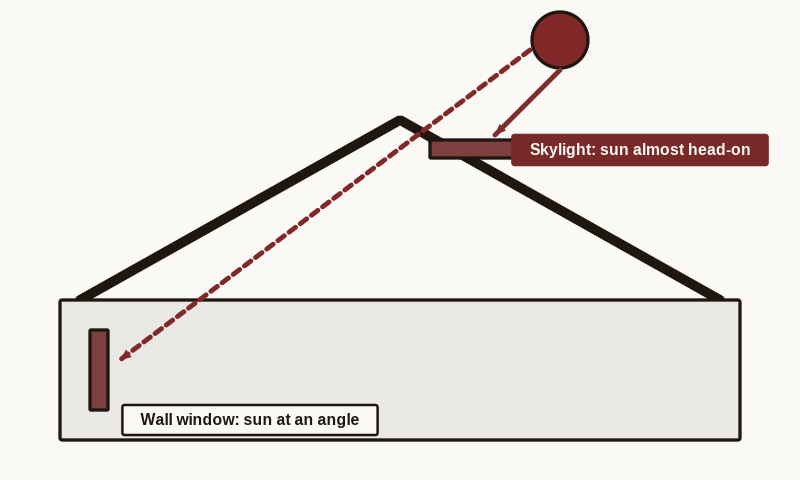
Skylight window film is heat control or UV film applied to the room side of a skylight to cut the heat, glare and fading that come through overhead glass. Skylights face the sky, so they take the sun almost head-on around midday in summer, which often makes them the hottest glass in a house for its size. Film can keep the light while taking much of the heat out. This guide covers which films suit skylights, what is different about fitting them, and costs. For the whole house, see home window tinting.
Why do skylights make rooms so hot?
A skylight faces upward, so in summer the high midday sun hits it almost straight on, through the hottest hours of the day. Wall windows catch the sun at an angle for part of the day; a skylight catches it for most of it. In Oklahoma City, where summer highs sit in the 90s for weeks, that heat collects under the ceiling.
Skylights also bring hard, direct glare onto floors, desks and screens, and UV that fades whatever sits beneath them.
Which film is best for a skylight?
A light ceramic or spectrally selective film is usually the best fit, because it rejects heat while keeping the daylight that is the reason for having a skylight. A reflective film rejects more heat if a slightly dimmer room is acceptable. Clear UV film protects against fading but does little for heat.
| Goal | Film | Effect on light |
|---|---|---|
| Less heat, keep brightness | Light ceramic or spectrally selective | Little change |
| Most heat cut | Reflective | Noticeably dimmer |
| Fading only | Clear UV film | Almost none |
| Soft, diffused light | Frosted or white film | Diffused, some reduction |
Compare total solar energy rejected on each film's spec sheet; see heat control window film.
Can all skylights take window film?
Most glass skylights can, but not all. Many are double-pane or laminated, so the installer checks the film maker's guidance for that glass. Plastic or acrylic domes usually can't take standard window film. Skylights with built-in blinds or tinted glass need extra checks, because trapped heat and absorbing glass raise thermal stress.
See tinting double pane windows for why glass type matters.
Why do skylight jobs cost more?
Skylights are overhead and often high, so fitting film means working on ladders or scaffolding, sometimes in a shaft, with gravity working against you. It takes longer and needs more care than a wall window. This Old House lists skylights at up to about $19 per square foot to tint, higher than standard windows.
Access is the main factor: a low, reachable skylight costs much less than one at the top of a tall shaft.
Is skylight film a DIY job?
Usually not. Working overhead on a ladder with wet film is awkward and risky, bubbles are hard to clear upward, and many skylights are double-pane or laminated glass that needs an approved film. Small, low, flat glass skylights are the exception. For most, professional fitting is safer and looks better.
See DIY window tinting vs hiring an installer.
Does skylight film help in winter?
Most solar films block some welcome winter sun as well as summer heat, so a skylighted room may feel slightly cooler on sunny winter days. Insulating low-e films can reduce heat loss through the skylight on cold nights. If the skylight makes the room cold in winter as well as hot in summer, ask about a film with both summer and winter figures.
What else helps with a hot skylight?
Skylight blinds and shades, exterior covers and shades, or diffusing panels can all reduce heat and glare. Blinds catch heat after it has passed through the glass, so they help less than film or exterior shading. Many homeowners use film for all-day heat control and a blind for the hottest afternoons or for sleeping.
For costs, see home window tinting cost.
Questions people ask
Does window film work on skylights?
Yes, on most glass skylights. A light ceramic or solar film cuts heat and glare while keeping the daylight. The installer checks the skylight's glass type against the film maker's guidance first, because many skylights are double-pane or laminated glass.
Can you tint a plastic dome skylight?
Usually not with standard window film, which is designed for glass. Acrylic and polycarbonate domes can react differently to film adhesives and heat. Interior shades, or replacing the dome with a tinted or low-e version, are the usual options for plastic skylights.
Will skylight film make the room dark?
Not with a light ceramic or spectrally selective film, which keeps most of the daylight. Reflective and darker films make the room noticeably dimmer, which defeats the purpose of many skylights. Ask to see how a sample changes the light before choosing.
How much does it cost to tint a skylight?
Skylights cost more per square foot than wall windows because of access, with This Old House listing up to about $19 per square foot. A single small skylight often meets an installer's minimum charge. Combining it with other windows in one visit is better value.
Does film stop skylights fading floors?
It slows fading considerably. Quality films block up to 99% of UV, a major cause of fading, and heat-rejecting films also cut some of the light and heat that contribute. No film stops fading completely, so rugs and floors in direct skylight sun still change slowly.
This guide is one of many on window tinting in Oklahoma City.
Sources
- International Window Film Association, heat control
- International Window Film Association, FAQ
- Published window film cost guides (This Old House), checked November 2026
- Oklahoma City climate normals, 1991 to 2020 (NOAA data via Wikipedia)
Last changed