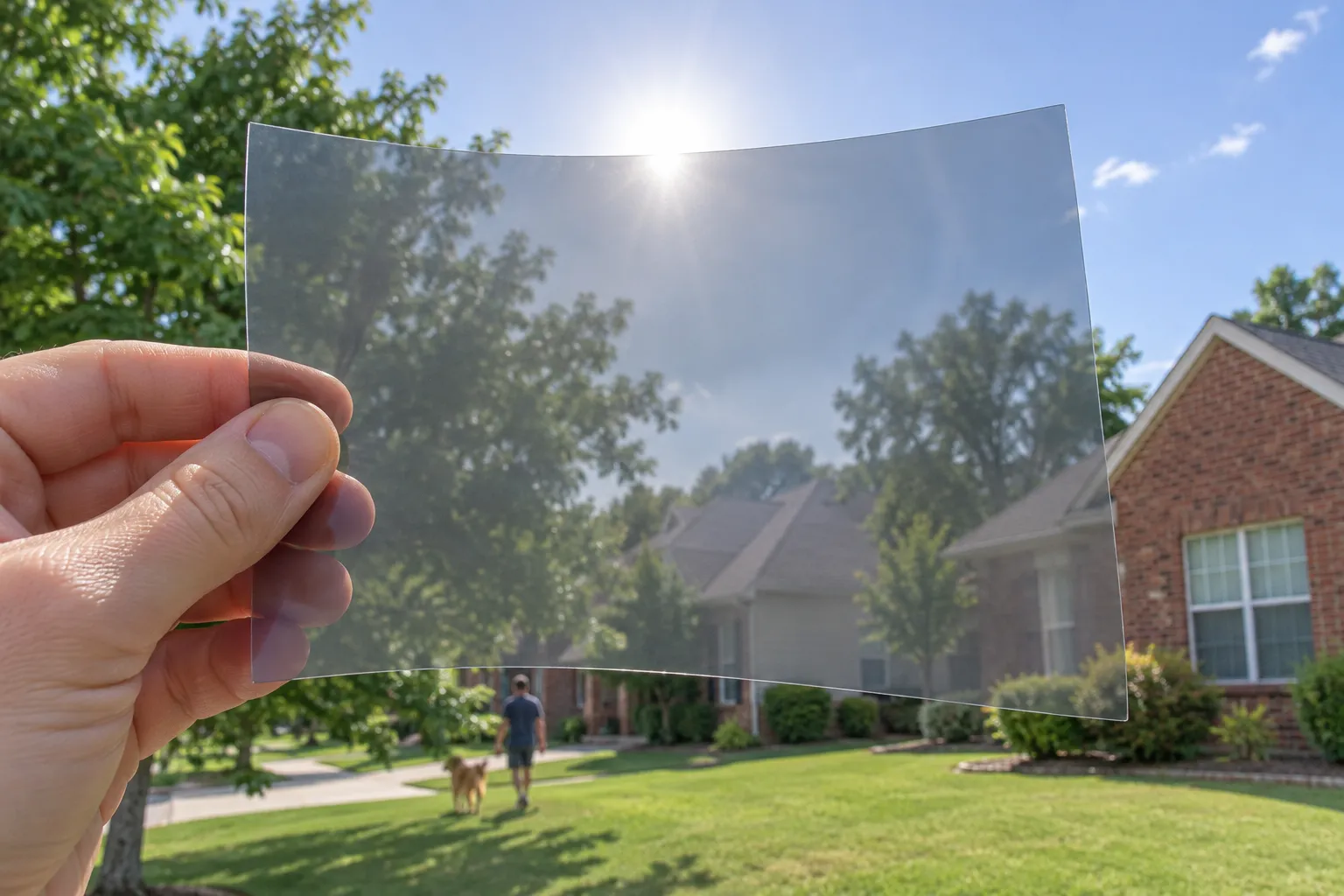
Ceramic window film is a polyester window film that uses microscopic ceramic particles, instead of dye or a metal layer, to block heat. The particles are chosen to absorb and reject much of the sun's infrared energy, the part you feel as heat, while letting most visible light through. The result is a film that can cut a lot of heat while looking clear or lightly tinted, with no mirror effect. This explainer covers what is in it and how it works; for choosing and buying it, see ceramic window film.
What is ceramic window film made of?
Like other window films, it is built from thin layers of polyester bonded together, with an adhesive on one side and a scratch-resistant coat on the other. In ceramic film, one layer carries ceramic nanoparticles, too small to see, that interact with infrared light. Makers use different ceramic compounds and keep their exact recipes private.
Similar metal-free films are sold under other names. 3M, for example, describes its Prestige line as metal-free and says it rejects up to 97% of infrared light.
How does ceramic film reject heat?
Sunlight carries energy as UV, visible light and infrared. Ceramic particles absorb and reflect much of the infrared while letting visible light pass, so the film cuts heat without cutting much daylight. The absorbed energy is mostly shed from the glass to the outside air rather than into the room.
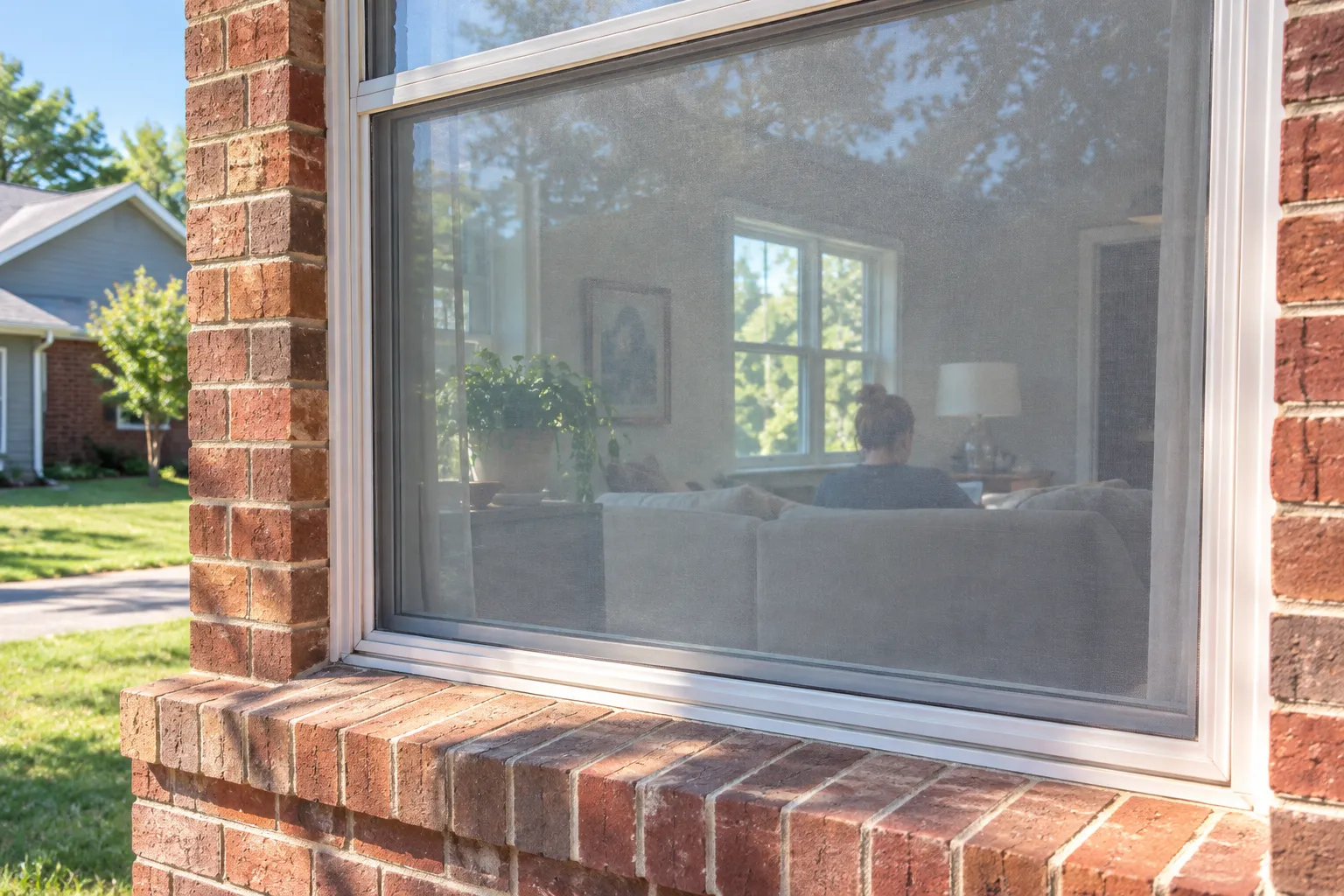
The International Window Film Association describes heat control films generally as working by reflecting or absorbing solar energy, with results depending on film type, installation, orientation and climate.
How is ceramic film different from dyed and metal film?
Dyed film darkens glass by absorbing light, which rejects relatively little heat for its darkness and can fade over time. Metal (reflective) film reflects a lot of heat but looks mirrored and can affect signals. Ceramic film targets infrared, so it rejects strong heat while staying light, non-mirrored and, makers say, signal-friendly.
| Dyed | Metal or reflective | Ceramic | |
|---|---|---|---|
| How it blocks heat | Absorbs light | Reflects solar energy | Targets infrared |
| Look | Darker glass | Mirrored by day | Clear or lightly tinted |
| Color stability | Can fade, turn purple | Stable | Stable |
| Signal interference | No | Possible | Makers say no |
Does ceramic window tint reduce heat?
Yes. Rejecting infrared is what ceramic film is designed for, so it reduces the heat coming through sunny glass while keeping rooms bright. How much depends on the product and your glass, so compare total solar energy rejected on the spec sheet. A light ceramic film can outperform a darker dyed film on heat.
Is "nano ceramic" different from ceramic film?
Usually not in any meaningful way. "Nano ceramic" emphasizes that the ceramic particles are nanoparticles, which is true of ceramic window films generally. Product names vary between makers. What matters is the film's measured performance on your glass, not the label on the box.
Does ceramic film block UV?
Yes. Like other quality films, ceramic films typically block up to 99% of UV, which protects skin near windows and slows fading of floors and furniture. The UV protection comes alongside the heat rejection, so one film does both jobs. Check the stated UV rejection on the product sheet.
See UV blocking window film, and for prices, ceramic window film cost.
Questions people ask
What is the difference between ceramic and regular window tint?
Regular dyed tint darkens glass and rejects relatively little heat for its darkness; ceramic film uses ceramic particles to reject infrared heat while staying light and clear. Ceramic costs more but cuts more heat at the same darkness and doesn't fade the way dye can.
Is ceramic window film see-through?
Yes. Ceramic film is designed to keep the view, and many products are clear or lightly tinted. It doesn't give privacy on its own. If you want both heat control and privacy, pair it with privacy film on some glass, or with blinds.
Does ceramic film look mirrored from outside?
No, generally not. Because it doesn't rely on a metal layer, ceramic film looks like clear or lightly tinted glass from outside. That is why it suits historic homes, HOA neighborhoods and street-facing windows where a mirror finish would stand out.
Can ceramic film go on house windows?
Yes. Ceramic film is widely used on homes and offices, not just cars. As with any film, the installer checks the film maker's guidance for your glass, especially double-pane and low-e windows, before recommending a specific product. Light shades are the most common choice for living areas.
Does ceramic film fade over time?
Ceramic film is known for color stability, because the particles don't break down the way dyes can. Quality ceramic film typically keeps its look for many years. Check the manufacturer's written warranty for what it says about color change, since terms differ between products.
This guide is one of many on Paneshade.
Sources
Last changed