Storefront window tint is window film chosen for shop glass, where the job is different from an office: you want to cut heat and protect stock from fading without hiding the displays that bring people in. Light solar and UV films do that; darker or mirrored films can make a store look closed in daylight. Many shops also add security film against smash-and-grab and branded film on entrance glass. This guide covers how to choose. For commercial film overall, see commercial window tinting.
What should storefront film do?
Storefront film should protect merchandise from UV fading, take the heat off staff and customers near the glass, reduce glare, and keep displays clearly visible from the street. The International Window Film Association lists fade protection, solar heat control and glare control as core commercial benefits. Visibility is the extra requirement for retail.
| Goal | Film | Watch out for |
|---|---|---|
| Stop stock fading | High-UV-rejection film | No film stops fading completely |
| Cooler shop floor | Light solar or spectrally selective | Avoid dark films that hide displays |
| Less glare at the counter | Light glare control film | Balance with visibility |
| Smash-and-grab protection | Security film, ideally anchored | Not bulletproof |
| Branding | Frosted or printed cut film | Keep sightlines to displays |
Will window tint hide my store displays?
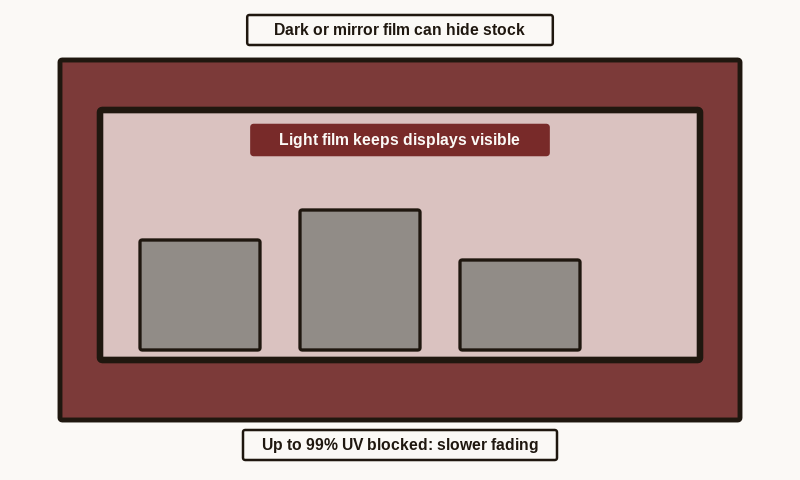
It can, if the film is dark or mirrored. In daylight, reflective films make glass look like a mirror from outside, which hides displays and can make a shop look closed. Light, spectrally selective films cut heat and UV while keeping the glass close to clear. Check samples on your glass at the time of day you trade most.
How much does film protect merchandise from fading?
A great deal, but not completely. Quality films block up to 99% of UV, a major cause of fading in fabrics, packaging and printed goods. The IWFA notes that no film eliminates fading entirely, because visible light and heat also contribute. Rotating stock out of direct sun still helps.
See UV blocking window film for how UV film works.
Should a storefront have security film?
It is often worth it on street-level glass, especially for shops with valuable stock. Security film holds broken glass together, slowing a smash-and-grab and reducing flying glass. The IWFA says film and any attachment system must be matched to the risk, and that it knows of no film with ballistic properties. Some film makers also offer anti-graffiti films.
See window security film and security window film cost.
Can storefront glass carry branding?
Yes. Cut-vinyl logos, frosted bands with lettering, opening hours and printed graphics are all common on entrance doors and upper glass. Keep the main display area clear for visibility and use branding on doors, transoms and the upper strip. Film can be updated when branding or hours change.
See decorative window film and glass door frosting.
Do I need landlord or city approval for storefront film?
Often you need landlord approval for anything on the building's exterior glass, and some shopping centers set rules on window coverings and signage. Lettering and graphics may count as signage under local rules. Check your lease and ask the property manager before booking, and check signage rules for large graphics.
How much does storefront window tint cost?
Storefront glass is quoted per square foot, and published guides put commercial film at roughly $5 to $15 per square foot installed for standard solar film, with security film about $7 to $15 and anchored systems more. A single small shop front may meet an installer's minimum charge. You get a written quote after a site visit.
See commercial window tinting cost.
Questions people ask
Does window tint affect what customers see in a storefront?
Dark or mirrored films make displays harder to see from the street in daylight. Light or spectrally selective films barely change visibility while cutting heat and UV. Ask to see samples on your glass at your busiest trading time before choosing.
What is the best window film for a retail store?
Usually a light, high-UV-rejection solar or spectrally selective film on display glass, so stock is protected and visible. Add security film on vulnerable street-level glass, and decorative or branded film on doors and upper glass. The right mix depends on the stock and the street.
Can window film stop a smash-and-grab?
It can slow one down. Security film holds broken glass together so getting through takes longer and makes noise, which often deters quick theft. Anchoring the film to the frame makes it stronger. It doesn't make glass unbreakable, so pair it with other security measures.
Will storefront film cut the shop's cooling costs?
It can reduce cooling needs on sunny, unshaded shop fronts, especially west-facing ones, and the IWFA says film can often pay back in a few years on buildings with large glass areas. Shaded storefronts under canopies or arcades gain much less from heat film.
Can storefront film be installed without closing the shop?
Usually, yes. Installers can work before opening, after closing or in sections, and the water-based installation is quiet. Display windows may need to be cleared temporarily for access. The schedule, and any sections done out of hours, is agreed at the site visit.
The rest of our guides start from window tinting oklahoma city.
Sources
- International Window Film Association, commercial
- International Window Film Association, safety and security
- LLumar, commercial window film benefits
- Published commercial window film cost guides, checked November 2026
Last changed